
UNMAS is proud to collaborate with organizations dedicated to supporting individuals affected by explosive incidents. Learn more about our partners below, including their services, areas of expertise, and contributions to survivor assistance and disability inclusion.


Non-Profits & Charities
Penta Medical Recycling
Mobility Restored. Lives Changed. People Empowered.
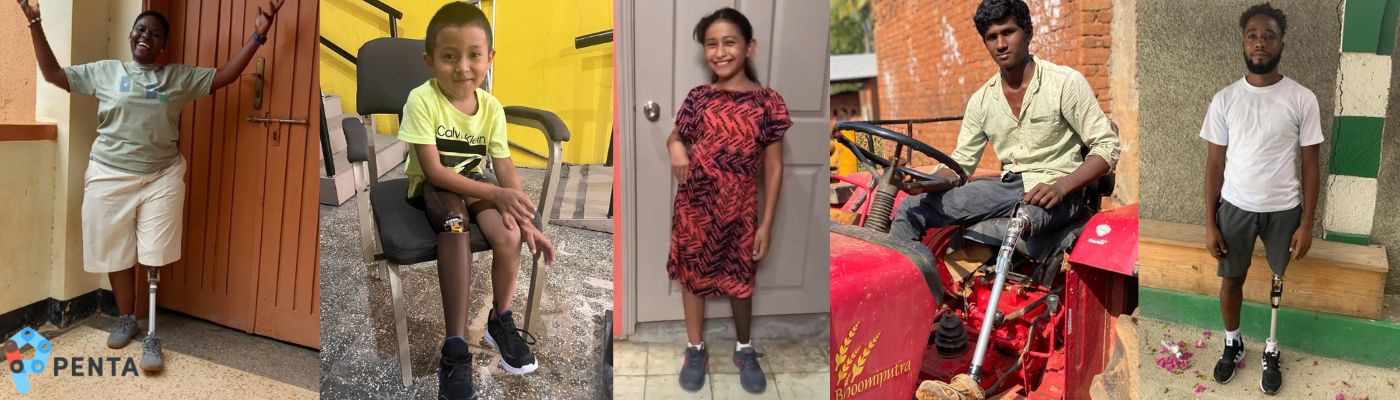
Penta Medical Recycling gives a second life to prosthetic limbs, reducing medical waste in the U.S. while restoring mobility to people affected by poverty, conflict, and disaster around the world.
Penta Medical Recycling is a U.S.-based nonprofit connecting unused and surplus prosthetic limbs to people who need them most. By collecting, inventorying, and redistributing components through a vetted network of clinics and hospitals, Penta diverts thousands of pounds of medical waste from landfills while restoring independence and dignity to amputees in low-resource settings.
Supporting Landmine Victims
In many parts of the world, particularly those affected by conflict or landmine contamination, access to prosthetic and rehabilitation services remains severely limited. Penta’s model complements broader humanitarian and recovery efforts by ensuring that high-quality medical resources are used efficiently and sustainably. Through our network of rehabilitation partners, we’re helping build pathways to independence and inclusion for people living with limb loss, including survivors of landmine injuries. This work supports the shared global goal of enabling mobility, dignity, and reintegration for all those rebuilding their lives after conflict.
Contact Information
STAND | We Walk Together: Restoring Mobility, Dignity, and Independence
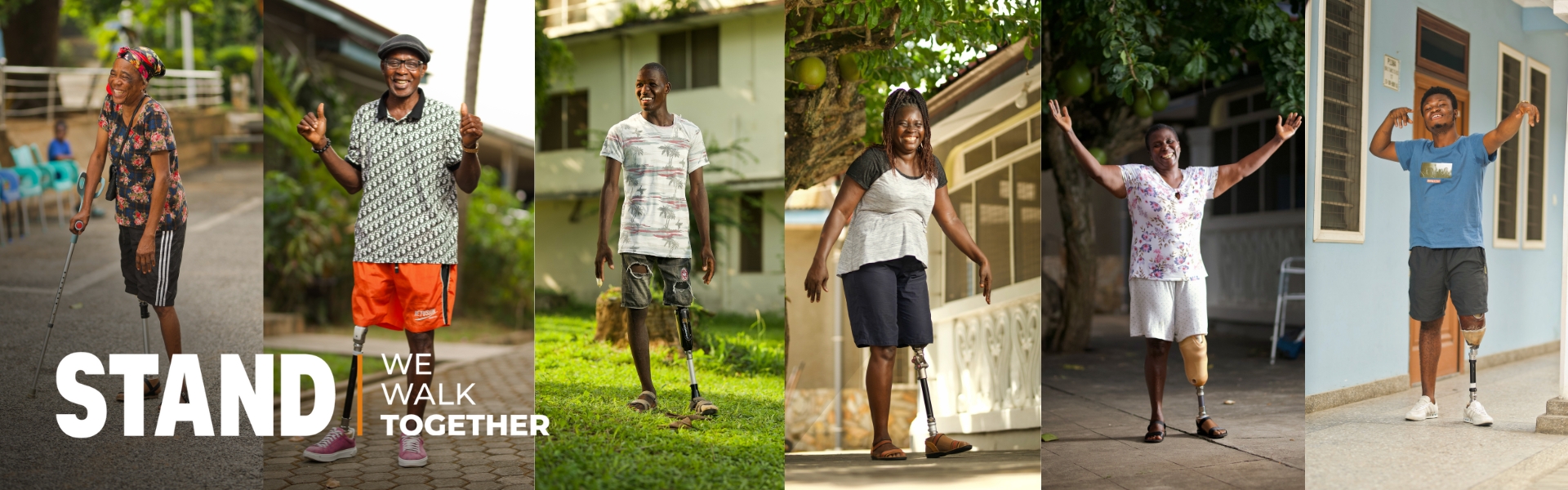
STAND works to ensure that every amputee in sub-Saharan Africa has access to affordable, high-quality prosthetic limbs and holistic rehabilitation. By providing refurbished prosthetic limbs, training local prosthetists, and funding emotional well-being services, we help people with limb differences regain their mobility and rebuild their lives. Our vision is a world where losing a limb doesn’t mean losing independence, dignity, or opportunity.
Areas of Work
Across sub-Saharan Africa, people with limb differences face a critical lack of access to prosthetic limbs and rehabilitation. Globally, nine out of ten people who need prosthetics don’t have access to them,* and this barrier leaves millions unable to walk, work, or fully live independent lives.
STAND strengthens rehabilitation systems across sub-Saharan Africa so that amputees can access the support they need. We improve access to prosthetic limbs, upgrade rehabilitation centres, train clinical teams, and help build resilient amputee communities. Together, these efforts expand rehabilitation capacity and ensure amputees can regain independence and rebuild their lives.
We support the overarching UNMAS principle that mobility, dignity, and social inclusion should be available to every person affected by limb loss.
Contact Information
Website: https://stand.ngo
Email: hello@stand.ngo
Founder: Tom Williams OBE
ATscale

Watch the ATscale profile video here
Assistive technology (AT) is an umbrella term for assistive products such as wheelchairs, hearing aids, prostheses, eyeglasses, and digital devices, and their related systems and services. ASSISTIVE TECHNOLOGY CAN BE LIFE-CHANGING. Assistive technology can enable people to live healthier, more productive, independent, and dignified lives than before, and to access education, employment, and community participation.
DESPITE ITS TRANSFORMATIVE POTENTIAL, ONE BILLION PEOPLE WORLDWIDE LACK ACCESS TO THE AT THEY NEED. This problem is particularly acute in low-income countries, where only 10% of the population has access. AT has historically been neglected and under-resourced, resulting in massive inequities based on age, disability, gender, type of functional difficulty, living environment, and socio-economic status.
ASSISTIVE TECHNOLOGY SAVES LIVES and can be crucial to survival in humanitarian settings: For accessing essential support to survive, recover, and rebuild lives.
ATscale, the Global Partnership for Assistive Technology, is hosted by UNOPS and was created to ensure that everyone, everywhere, can access and afford the assistive technology they need, unlocking a lifetime of potential. ATscale's mission is to transform lives through assistive technology. It catalyses action to ensure that, by 2030, an additional 500 million people in low- and middle-income countries get the life-changing AT they need.
Contact Information
Website: www.atscalepartnership.org