

Lying dormant until triggered by a victim and intended to incapacitate, landmines spread terror, maim civilians and render vast tracks of land unusable.
This is a brief visual history of the United Nations in mine action; it is not exhaustive but touches on some of the key factors that made the global campaign a success. It is a living document and we welcome your comments to expand and improve our telling of the story. Please send them to https://unmas.org/en/contact.
The global movement to ban anti-personnel mines is a pearl. The first words of the United Nations Charter are “We the people of the United Nations…” and they are the key to how the Anti-Personnel Mine Ban Convention came into being. Anti-personnel mines were banned because individuals were so disgusted by the images of innocent people, men, women and thousands of children, maimed by this weapon that they shouted out, demanding action be taken. They were joined by other individuals, and quickly a movement was born. At that time, it was said that it would take 1000 years to eradicate landmines. That was 30 years ago; today, hundreds of nations have signed up to the Anti-Personnel Mine Ban Convention, and hundreds of millions of mines have been destroyed, or their fabrication halted. The clearance of known anti-personnel minefields could be completed within a decade.
Working together, or, multilateral cooperation, is what made this possible.
The United Nations cannot act alone; it needs the support of “We the people…” to succeed. The progress seen through the movement to ban landmines and then cluster munitions- with grassroots activism sparking the adoption of new multilateral mechanisms - must be learned from and replicated in combatting new global challenges. Let it inspire us all.
The History of Landmines
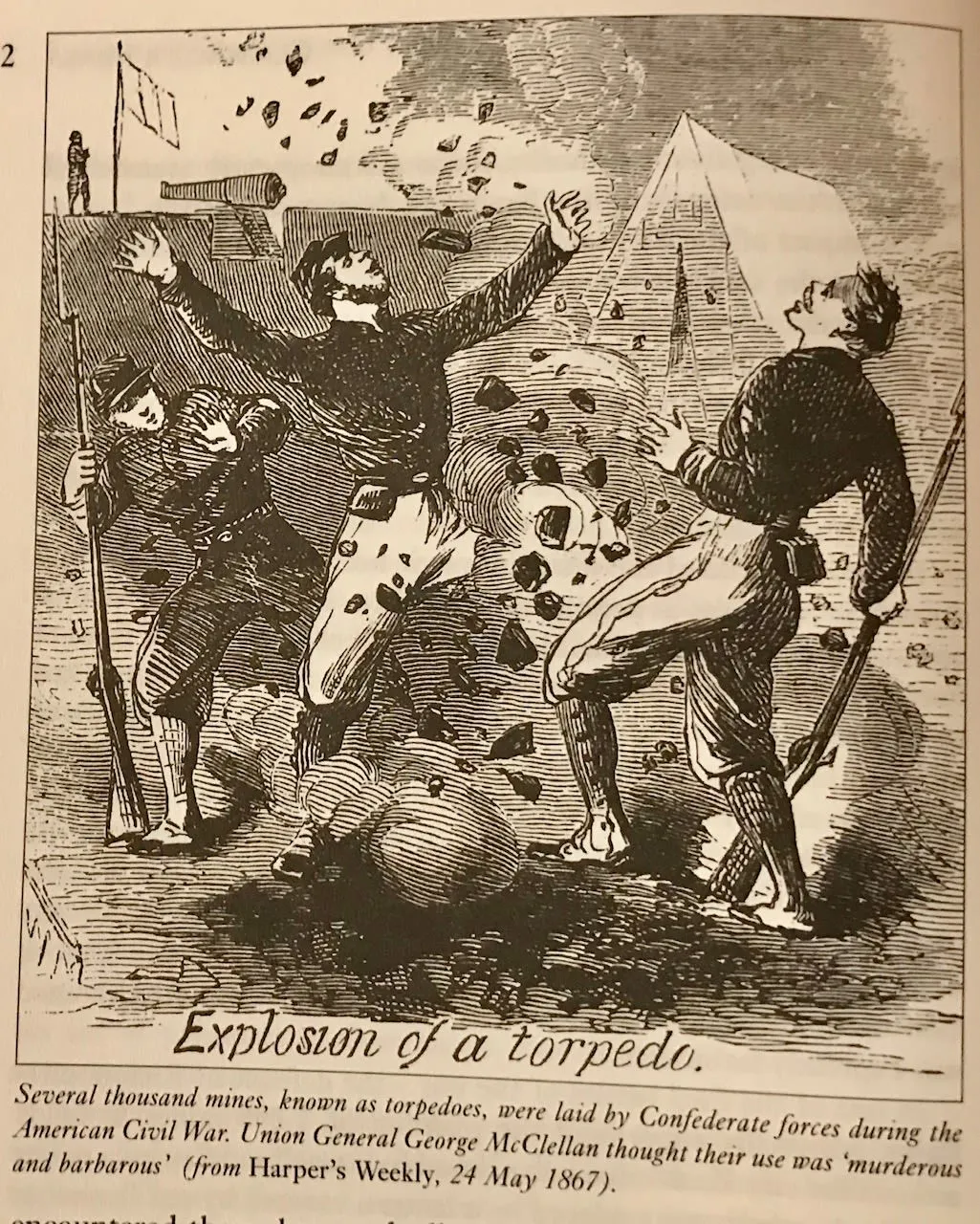
The use of landmines can be traced back to the American Civil War (1861-1865). Later, during World War I, mines were deployed to defend against tanks.
Because of the size of anti-tank mines, enemy soldiers could easily enter minefields and remove the mine for their own use. Therefore, anti –personnel (AP) mines were sown throughout anti-tank minefields to deter enemy troops from entering, and to channel enemy forces into possible ambush situations.
At first, they were used as a defensive weapon to protect the more valuable anti-tank mine, but their proliferation for offensive purposes, which started during WWII, advanced during the wars in Indochina (1955-1990) and the Afghan-Soviet war (1979-1989).
More recently, technological advancements such as the use of air-scattered munitions enable rapid contamination of land with AP mines.
From prisoners of war to peacekeepers
Early Deminers
In Europe, after the end of World War II, prisoners of war were often forced to carry out mine clearance. The speed at which clearance took place was remarkable, however, the methods used would be deemed extremely dangerous today and there were many casualties. In an attempt to satisfy the provisions of the 1929 Geneva Convention, these prisoners of war were instead categorized as “surrender enemy personnel”"
In 1949, article 52 in the Geneva Convention was revised and stated that "no prisoner of war may be employed on labour which is of an unhealthy or dangerous nature. The removal of mines or similar devices shall be considered as dangerous labour".
UN missions and Military Demining
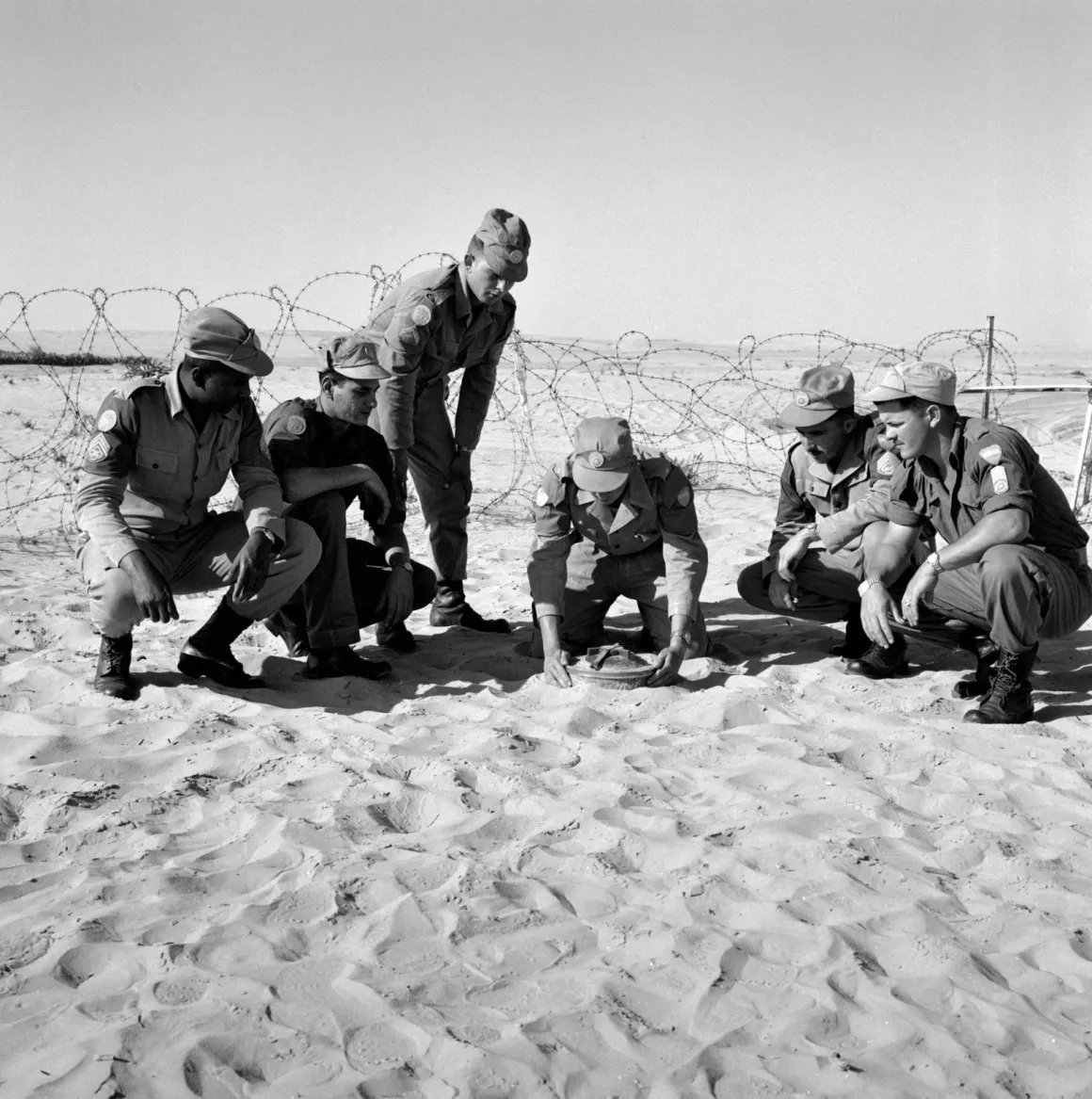
The First United Nations Emergency Force (UNEF I) was established to secure an end to the Suez crisis in 1956. One of UNEF's objective was to carry out mine clearance, though only as part of the peacekeeping operation.
It was the first mission of the United Nations for Military Mine Action. Unlike the humanitarian mine action that followed in the late 1980's, within military demining, military troops and officers aim to clear lanes through a minefield and then continue with their peacekeeping mission. The land recuperated and cleared is thus restricted only to these lanes.
The United Nations Operation in the Congo (ONUC) which was established in 1960 to help restore the stability in the Republic of the Congo after its independence also included a military mine clearance detachment.
The UNEF II (United Nations Emergency Force) 1973-1979 was in charge of supervising the ceasefire between Egyptian and Israeli forces.
First UN Humanitarian Demining mission in Afghanistan 1988
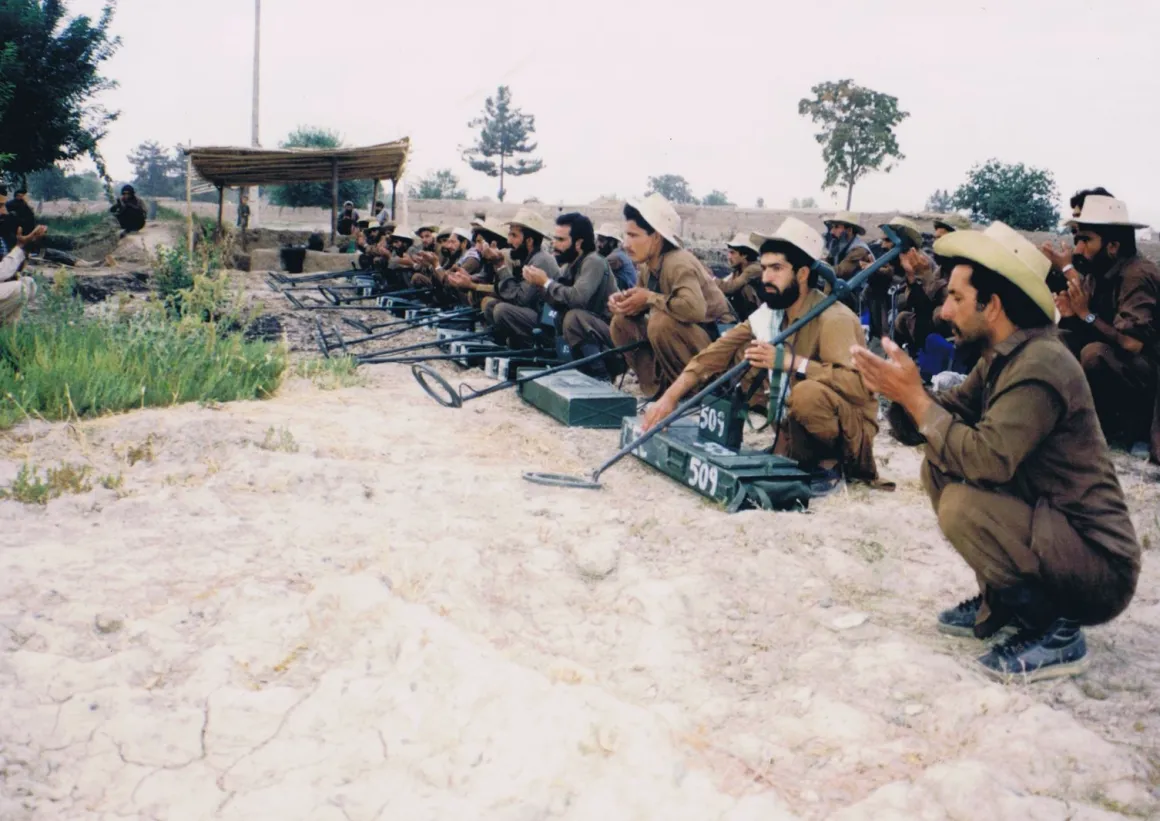
The United Nations Office for the Coordination of Assistance Programmes relating to Afghanistan (UNOCA) was established in 1988, with a mandate to address all humanitarian issues in the country, including landmine contamination. First, the mission introduced a training programme for volunteers among Afghan refugees, so that they could learn how to clear their own villages of landmines, once they returned home.
This was expanded to include ex-mujahideen fighters who were also trained in locating and destroying landmines. The programme was accompanied by a mine awareness programme in order to help civilians recognise and avoid the risks posed by AP mines.
A year later, in 1989, the Mine Action Programme for Afghanistan (MAPA) was formed and run by Mr. Ian Mansfield, as a large-scale institutional structure to coordinate all mine action operations in the country.
Crises in Kuwait and Cambodia revealed the scale of the problem.
The Government of Kuwait and Demining in 1991
Following the invasion of Kuwait by Iraqi forces, the 1990-1991 Gulf War saw thousands of mines laid by Iraqi troops. In the aftermath of the war the Kuwaiti government decided to allocate 1 billion USD for demining operations, attracting and absorbing all organisations and NGOs in humanitarian demining that were active at that time.
This investment offered the mine action organisations the opportunity and necessary funds to make significant technological and organizational advancements. Today, the open desert areas remain contaminated with landmines and unexploded ordnance (UXO). It is estimated that almost two million mines were laid, and though Kuwait has managed to remove 1.65 million mines, the remaining 350,000 are yet to be located and destroyed.
Cambodia 1992
![UNTAC peacekeepers from Bangladesh teaching a Cambodian soldier how to deactivate mines. [1992] 01 January 1992 Cambodia.UN Photo/J Bleibtreu](https://unmas.org/sites/default/files/styles/image_cropped/public/2026-08/cambodia-2-280x405.jpeg.webp?itok=yR5E5oZy)
The United Nations Transitional Authority in Cambodia (UNTAC) was the first large peacekeeping operation undertaken by the UN. Established in 1992-1993 following Security Council Resolution 745, UNTAC supervised and implemented the necessary procedures to support stability and peace in the country. Key activities included disarmament and mine clearance.
Three organizations working in Cambodia were the first to realise the extent and humanitarian impact of the landmine crisis ( the Coalition for Peace and Reconciliation, Handicap International HI, and the Mines Advisory Group MAG).
Furthermore, testimonies and detailed accounts of the landmine crisis appeared in medical journals thanks to the doctors and surgeons of the International Committee of the Red Cross (ICRC). Doctors expert in emergency operations and prosthetic medicine saw the number of amputees growing at an alarming rate and were compelled to take action.
International Campaign to Ban Landmines (ICBL)
Towards the launch of the International Campaign to Ban Landmines (ICBL) in 1992.
In 1991, the Vietnam Veterans of America Foundation (VVAF) and NGO Medico International (MI) launched an advocacy campaign to call for a global ban on anti-personnel mines. Within two years more than 350 supporting organizations had joined the campaign. The ICRC played an important role in the lobbying arena, stressing the importance of upholding international humanitarian law.
Mr. Cornelio Sommaruga, the President of ICRC, was a prominent figure in building momentum. He argued extensively on the humanitarian impact of landmines compared to their limited military utility, participating in diplomatic conferences in Geneva and providing abundant empirical medical evidence of the devastation caused by landmines.
In 1997, Ms. Jody Williams was the founding coordinator of the ICBL. The same year the Nobel Peace Prize was awarded jointly to ICBL and Jody Williams for their diplomatic achievement and commitment to a total ban on AP mines.
Engagement of UN Leadership 1992
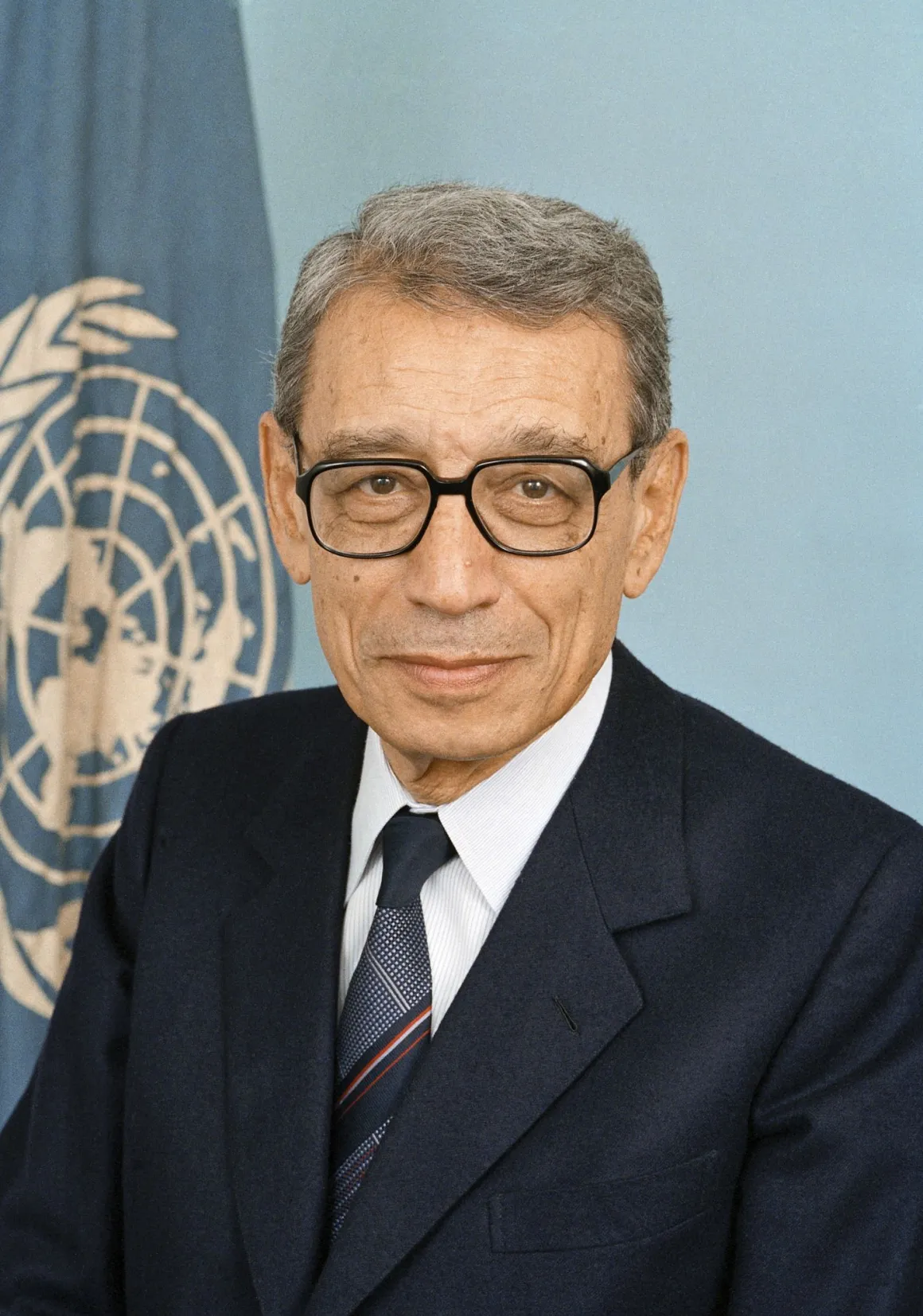
Boutros Boutros-Ghali was the first Secretary-General of the United Nations to address explicitly the humanitarian crisis of landmines. In his Agenda for Peace , submitted to the General Assembly in 1992 he stated:
“Increasingly it is evident that peace building after civil or international strife must address the serious problem of landmines, many tens of millions of which remain scattered in present or former combat zones.” An Agenda for Peace, A/47/ 277 (1992).
In 1994, he wrote an article in Foreign Affairs demonstrating that should the effects of landmines be widely known , it " would undoubtedly shock the conscience of mankind- the same public reaction that led to the banning of chemical and biological weapons", highlighting the need for an international agreement on a total ban on the use, stockpiling, production and transfer of anti-personnel mines.
From 1992 to 1996
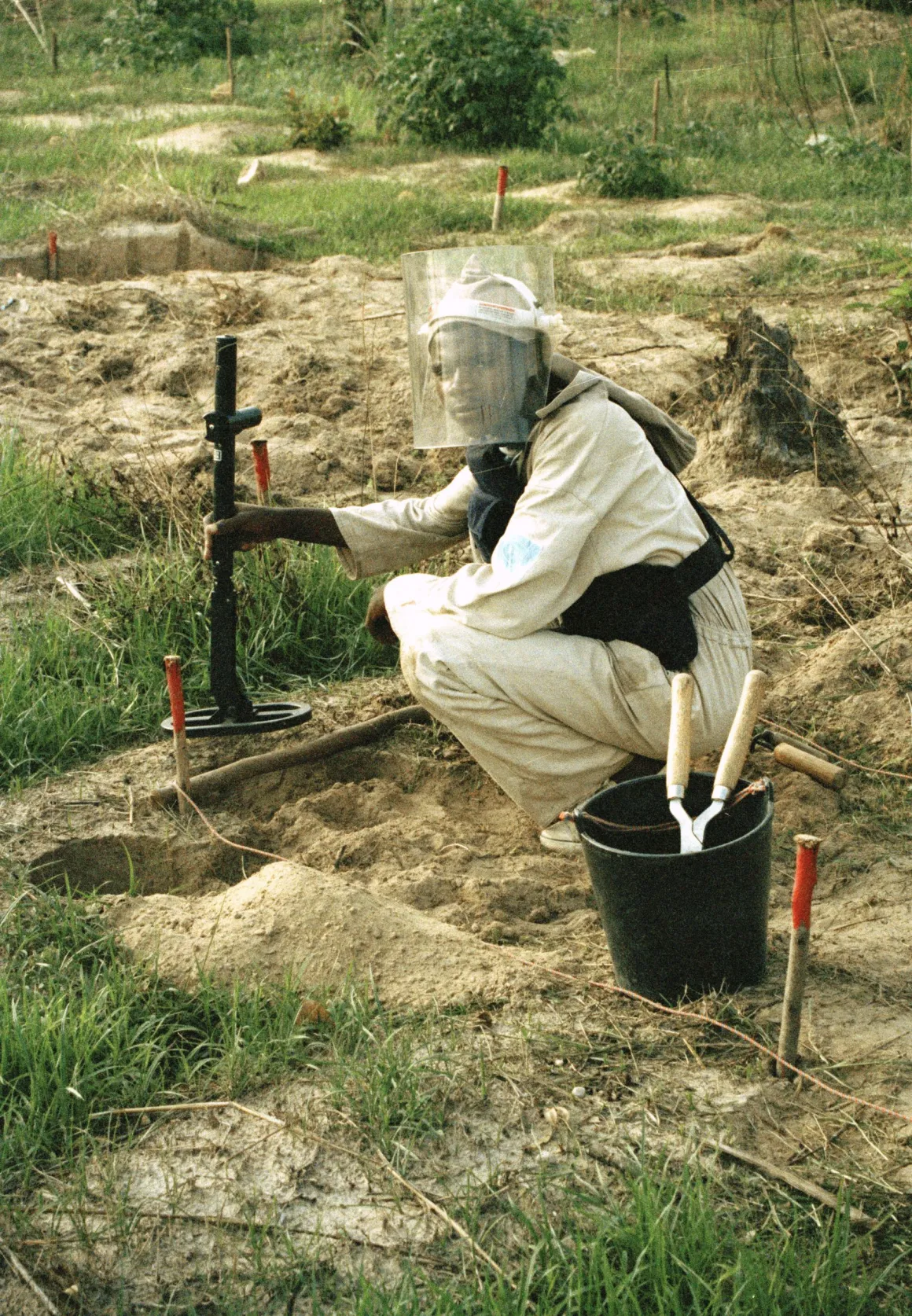
From 1992-1996, the countries most affected by landmines were Angola, Cambodia, Mozambique and Somalia.
During the Cold War, numerous internal armed conflicts and civil wars incited by the legacy of colonialism and as a result of the withdrawal of colonial regimes developed into "proxy wars". Landmines were used extensively; they were a cheap, easy -to- deploy weapon that could terrorize populations.
The United Nations Angola Verification Mission (UNAVEM III) was established to facilitate the restoration of peace and the process of national reconciliation in Angola. As part of UNAVEM's mandate, demining schools were established to train and aid in the process of disarmament and arms control.
In the early 1990's, the following UN entities implemented programmes for mine action in the countries that were then most affected; Angola, Cambodia, Mozambique and Somalia.
- UNDHA (United Nations Department of Humanitarian Affairs)
- UNDPKO (United Nations Department of Peacekeeping Operations)
- UNICEF ( United Nations International Children's Emergency Fund)
- UNHCR ( United Nations High Commissioner for Refugees)
The Anti-Personnel Mine Ban Convention (APMBC)
Building the Momentum for the AP Mine Ban Convention, 1996-1997
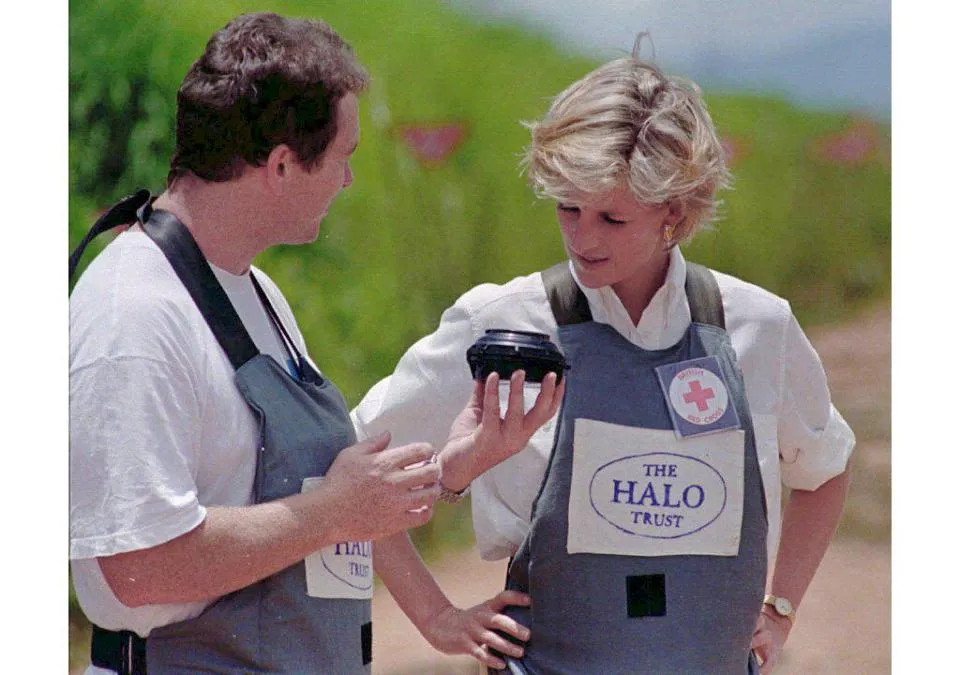
The image of Princess Diana walking through a minefield in Angola in January 1997 , wearing a suit of protective clothing, alongside her subsequent campaigning on the issue and her visit to minefields in Bosnia just a few weeks before her death, helped to create the momentum that led to the adoption of the Anti-Personnel Mine Ban Convention in December the same year. (Martin Barber, Blinded by Humanity, p. 148)
On top of that, the advent of the internet and the proliferation of advocacy meetings encouraged and motivated more NGO's and Member States to mobilize for an international instrument to ban AP (anti-personnel) mines.
The Ottawa Process is a term that encompasses all the series of negotiations that started in 1996 and finally led to the adoption of the Anti-Personnel Mine Ban Convention. The process was primarily initiated by the Canadian Foreign Minister Mr. Lloyd Axworthy and took place in Ottawa, Vienna, Brussels and Bonn .
Learn more here: https://legal.un.org/avl/ha/cpusptam/cpusptam.html
The Convention
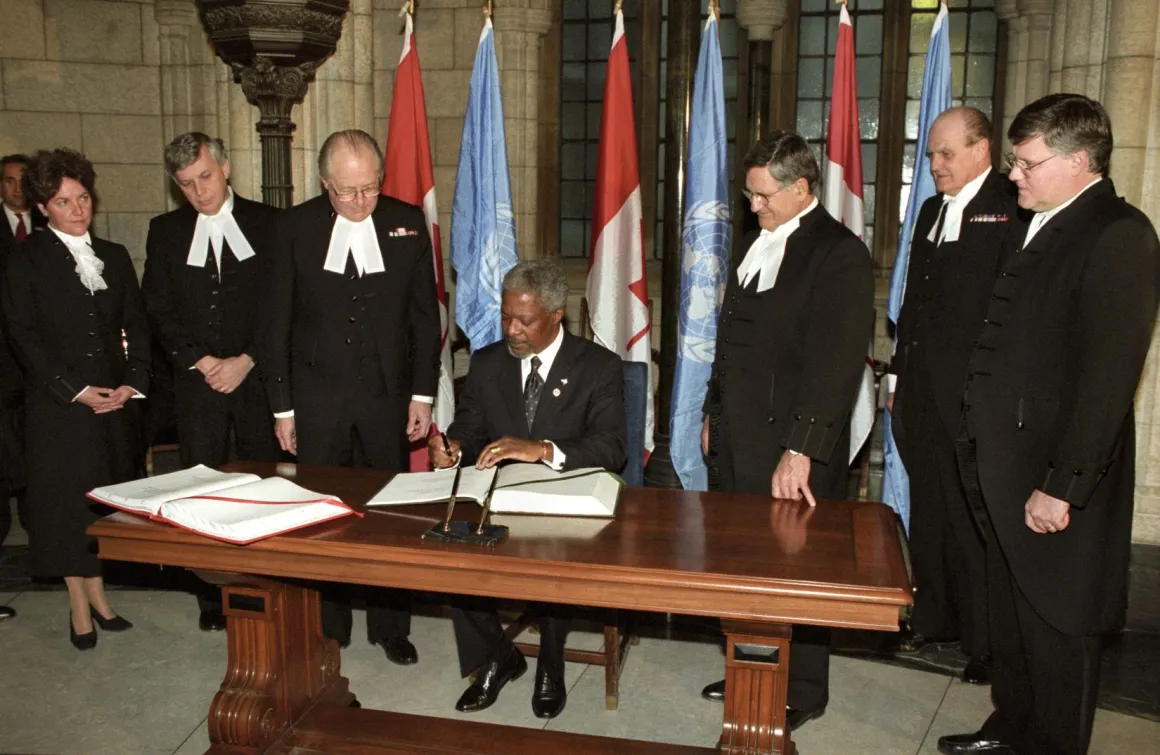
The Convention of the Anti-Personnel Mine Ban Convention was adopted on 18 September 1997 in Oslo and was opened for signature in Ottawa, Canada in December 1997.
The United Nations Secreary-General Kofi Annan made his first State visit to Canada to meet with senior officials and address the opening ceremony for the signing of the Convention on the Prohibition of the Use, Stockpiling, Production, Transfer of Anti-personnel mines and on their Destruction. The APMBC entered into force in March 1999. To date, 164 States have formally agreed to be bound by the Convention.
The Convention provides a framework for international mine action, seeking both to end existing suffering and to prevent future suffering.
https://www.apminebanconvention.org/
Evolution of International Humanitarian Law and Mine Action
- 1974: The ICRC, at the prompting of the Swedish government, convened in Luzerne a Conference of Governmental Experts on Weapons that May Cause Unnecessary Suffering or Have Indiscriminate Effects. Discussion focused on five types of weapons: cluster bombs, flechettes, tumbling bullets, aircraft-delivered mines, and incendiary weapons.
- 1976: The second Conference of Governmental Experts, held in Lugano, reached consensus on three proposals: a ban on non-detectable fragments, restrictions on remotely delivered mines, and a prohibition on incendiary attacks against civilian areas.
- 1977: The United Nations General Assembly set into motion preparatory conferences which took place in 1978 and 1979 leading to the UN Conference on Prohibition or Restrictions of Certain Conventional Weapons which May Be Deemed to Be Excessively Injurious or to Have Indiscriminate Effects (shortened to Convention on Certain Conventional Weapons or CCW).
- 1980: The CCW and its Protocol I on Non-detectable fragments, Protocol II on Landmines, booby traps and other devices, and incendiary weapons represented the first formal ban or restriction of the use of conventional weapons since the 1899 Hague Declaration banning dum-dum bullets. However, the scope of Protocol II failed to cover non-international conflicts and fell short of banning landmines totally and instead prohibited and restricted the use of certain types of mines. At the same time, technological advancements such as non-detectable mines and anti-handling devices were transforming the character of the landmine problem.
- 1996: The Convention on Certain Conventional Weapons Review Conference adopted the Amended Protocol II on mines, booby traps and other devices Protocol (AMP), which significantly improved the original 1980 Protocol. The AMP was made applicable to internal armed conflicts as well as international armed conflicts.
- 1997: The Convention on the Prohibition and the Use, Stockpiling, Production and Transfer of Anti-Personnel Mines and on their Destruction, commonly referred to as the Anti-Personnel Mine Ban Convention or Ottawa Convention, was opened for signature in Ottawa, Canada. The Ottawa Process was a result of the advocacy work of the International Campaign to Ban Landmines and the International Committee of the Red Cross working in partnership with a core group of States that were equally committed to a ban on anti-personnel mines. These States included Angola, Austria, Belgium, Bosnia and Herzegovina, Canada, Germany, Norway, Philippines, South Africa and Switzerland, among others.
- 2003: The Protocol V on Explosive Remnants of War to the CCW was adopted by States Parties on 28 November 2003. It is the first multilateral agreement to deal with the wide range of unexploded and abandoned ordnance that regularly threaten civilians, peacekeepers and humanitarian workers after the end of an armed conflict. Importantly, the negotiations and adoption of the final text included all the major military powers. Together with the Convention on the Prohibition of Anti-personnel Mines, the Protocol on Explosive Remnants of War is an important element in the efforts to end the post-conflict death, injury and suffering that is a regular feature of modern warfare.
- 2006: The Convention on the Rights of Persons with Disabilities (CRPD) and its Optional Protocol (A/RES/61/106) were adopted at the United Nations Headquarters in New York, and were opened for signature in 2007. It is the first comprehensive human rights treaty of the 21st century. It adopted a broad categorization of persons with disabilities and reaffirms that all persons with all types of disabilities must enjoy all human rights and fundamental freedoms, including civil, political, and social and economic rights.
- 2008: The Convention on Cluster Munitions was adopted in Dublin and signed in Oslo. The Convention on Cluster Munitions is a humanitarian imperative-driven legal instrument which prohibits all use, production, transfer and stockpiling of cluster munitions. In addition, it established a framework for cooperation and assistance to ensure adequate assistance to survivors and their communities, clearance of contaminated areas, risk reduction education and destruction of stockpiles. States Parties have committed to destroy existing stockpiles in eight years; clear contaminated land in ten years; assist victims; provide technical, material and financial assistance to other States Parties; undertake transparency measures; adopt national implementation measures; and promote universal adherence to the Convention.
The Establishment of UNMAS and Kosovo Response
After the signing of the APMBC, the General Assembly of the United Nations (A/RES/72/75) established an entity exclusively for mine action. The establishment of the United Nations Mine Action Service (UNMAS) in 1997 marked the beginning of a new institutional and organizational framework for operations in mine action. UNMAS is mandated to coordinate the mine action work of the United Nations system as Chair of the Inter-Agency Coordination Group on Mine Action (IACG-MA) and its subsidiary groups. Located within the Department of Peace Operations, UNMAS works to eliminate the threat posed by mines, explosive remnants of war and improvised explosive devices by coordinating United Nations mine action, leading operational responses at the country level, and supporting the development of standards, policies and norms.
The first UNMAS field programme was established in Kosovo in 1999. Mine accidents among returning Kosovars increased as the population returned to work in the fields and to collect firewood for the winter. Seventy percent of mine victims among returnees were under the age of 24.
From 2000 to 2005, Mr. Martin Barber was the director of the United Nations Mine Action Service. https://www.unmultimedia.org/avlibrary/asset/2123/2123828/
Technological Advancements in Clearance Methods and Equipment
During the first demining operations of the UN for military purposes, mine-detecting dogs were used in order to locate hidden mines and prevent accidents.
Gradually and following technological advancements in the manufacture of mines and improvised explosive devices (IEDs), there has been an evolution in the tools and methods employed to carry out mine clearance.
In the 1990s, metal detectors were widely used for demining in minefields around the world. Increasingly, however, plastic mines were manufactured that had few magnetic components. Additionally, explosive devices of a more improvised and dangerous nature developed. With the initiative of Patrick Blagden, the first director in charge of demining at the United Nations Department of Peacekeeping Operations (DPKO), one of the solutions developed was "Mine Eye"- a tool which uses electromagnetic radar to visualise the shape and the depth of mines buried underground.
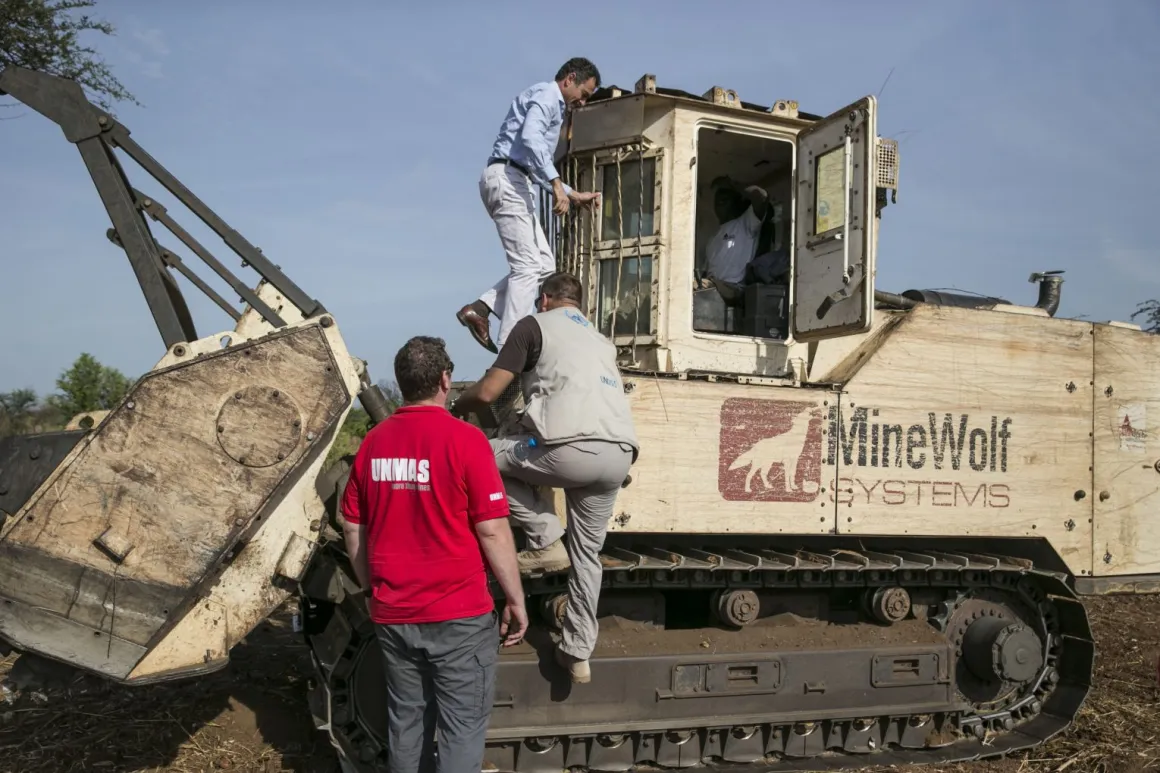
More technological innovations addressing the needs of mine action (both for surveying, locating, destroying and detonating purposes) include remote control devices, minewolf demining machines and robots driven to disarm.
More recently in 2019 in Iraq, with support from UNMAS instructors, a training on drones took place. Several mock explosive hazards were hidden in an open field, and using the drones, the trainees were required to locate and photograph them, in addition to photographing surrounding scenery. This drone technology allows deminers and surveyors to study explosive ordnance thoroughly before any attempt to remove it, thus saving lives in the process.
References/ Bibliography:
Barber M., Blinded by Humanity, Inside the UN's Humanitarian Operations, I.B. Tauris, 2016
Cahill K., Roma T., Silent Witnesses, Published by The United Nations and The Center for International Health and Cooperation, 1995
Croll M., The History of Landmines, Pen and Sword, 1998
Hubert D., "The Landmine Ban: A Case Study in Humanitarian Advocacy", Occasional Papers, Thomas J. Watson Jr. Institute for International Studies, 2000
Mansfield Ian, Stepping into a Minefield : A Life Dedicated to Landmine Clearance Around the World, Big Sky Publishing, 2016
Roly Evans, "Lessons from the Past: The Rapid Clearance of Denmark's Minefields in 1945", Journal of Conventional Weapons Destruction, Vol 22: 1, Article 4, 2018.
Shawn R., Williams J., After the Guns Fall Silent, The Enduring Legacy of Landmines, Oxfam Publications, 1995