


Strengthening national capacity
South Sudan continues to face the legacy of conflict, with the presence of explosive ordnance affecting communities across the country and posing risks to children and families.
Strengthening national capacity to identify, assess and respond to these risks is essential to building a sustainable and nationally led mine action response.
The NMAA is the government body mandated to authorize and coordinate mine action operations in South Sudan, with UNMAS providing technical and operational support to strengthen its capacity. However, it has been difficult for the NMAA to maintain their own teams operating in the field, limiting its ability to directly verify reported contamination and deliver risk education to affected communities.
Through funding from the Government of Japan through Japan International Cooperation Agency (JICA) and technical support from UNMAS, six NMAA Survey and EORE teams, comprising 24 personnel: 18 men and six women have been trained, accredited and deployed. Their deployment restores an important operational capability within the national authority, enabling NMAA personnel to gather field data on suspected contamination, respond to reported hazards and deliver life-saving safety information directly to communities.
Just months into their operational deployment, the teams are already putting this strengthened capacity into practice. As of August 2026, they have conducted over 414 Non-Technical Surveys (NTS), responded to over 155 spot tasks and delivered EORE to over 11,136 people (2,075 women, 1,782 men, 3,749 girls and 3,530 boys), reaching communities in areas where access can be challenging.
For NMAA personnel deployed in the field, the JICA supported project has provided an opportunity to put the training and skills gained through the project into practice and work directly with communities affected by explosive ordnance.
The training we received has equipped us with the skills and confidence to engage directly with communities, collect the information needed to understand the explosive ordnance risks they face, and provide immediate safety messages. This helps ensure that community members know how to respond safely if they encounter a suspicious object," said Abraham Matiop, NMAA Team Leader.
From Capacity to Action
In Odemo Village, Lokiliri Payam, Central Equatoria, South Sudan,along the Juba - Nimule road, communities continue to live with the legacy of conflict, where the presence or suspicion of explosive ordnance can affect everyday activities and pose risks to children and families.
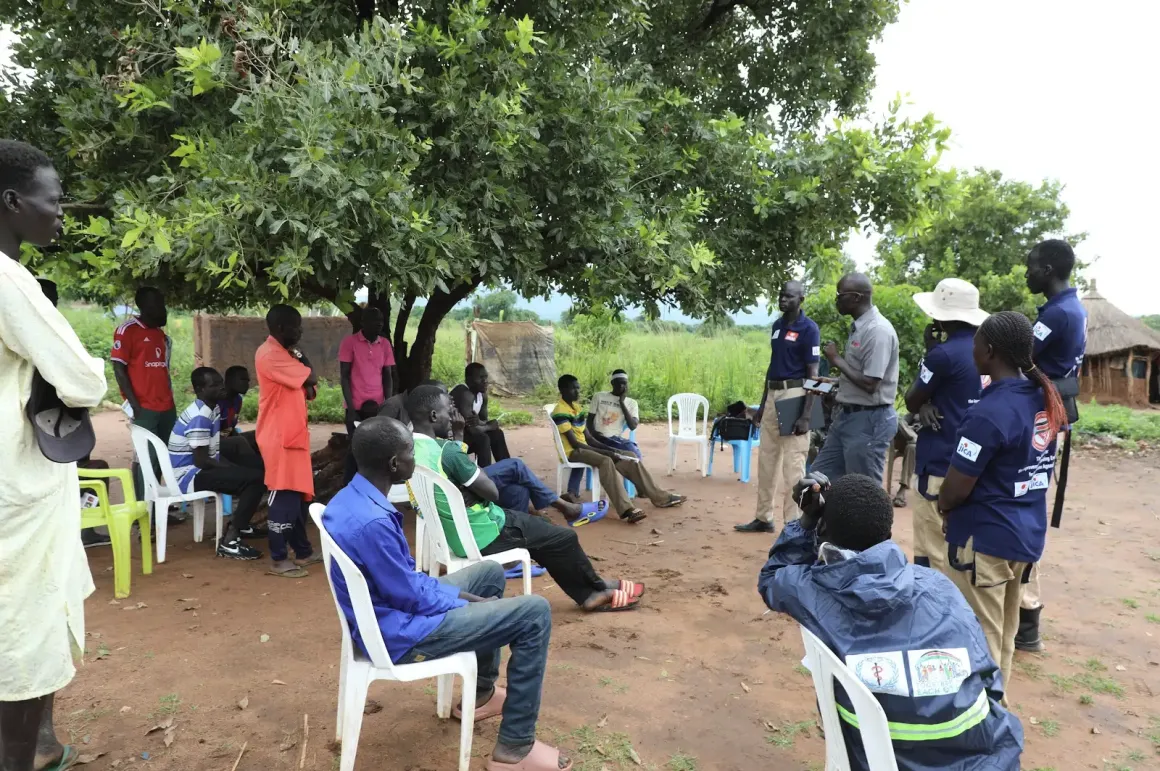
One of six NMAA Survey and EORE teams arrived with an important task: to listen to the community, gather information about potential explosive hazards and provide residents with the knowledge they need to stay safe.
The team's work began with an NTS, an essential first step in understanding whether an area may be affected by explosive ordnance.
The team met with the local chief and other community members to understand the history of the area and identify locations where explosive hazards may have been encountered or suspected. Among those consulted was a former member of the armed forces whose knowledge of the area provided additional information to support the team's assessment.
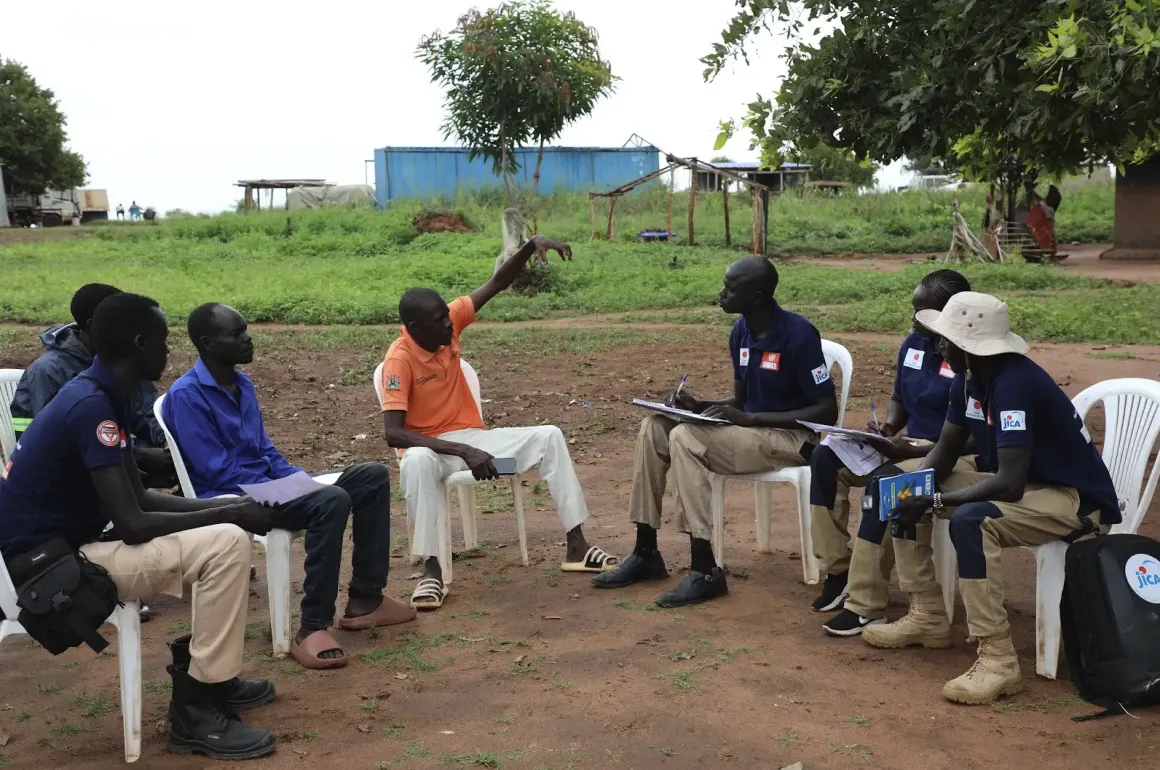
“People here know the places where they have seen or suspected dangerous objects. Having the team come and listen to the community means we can share that information and help identify areas that may be unsafe,” said Abi Francis, Executive Chief, Odemo Village.
Information gathered from residents helps the team build a clearer picture of suspected contamination and provides field data that can inform further investigation and the prioritization of mine action interventions.
Turning information into protection
Following the survey, the team delivered EORE to children and other community members in Odemo, providing practical guidance on how to recognize explosive hazards, avoid dangerous behaviour and safely report suspicious objects.
Children are particularly important audiences for EORE because curiosity and limited awareness of explosive hazards can increase their exposure to risk.
In Odemo alone, the team reached 27 people: 2 women, 15 men, 4 girls and 5 boys with EORE, providing practical knowledge that can help community members reduce their exposure to explosive hazards.
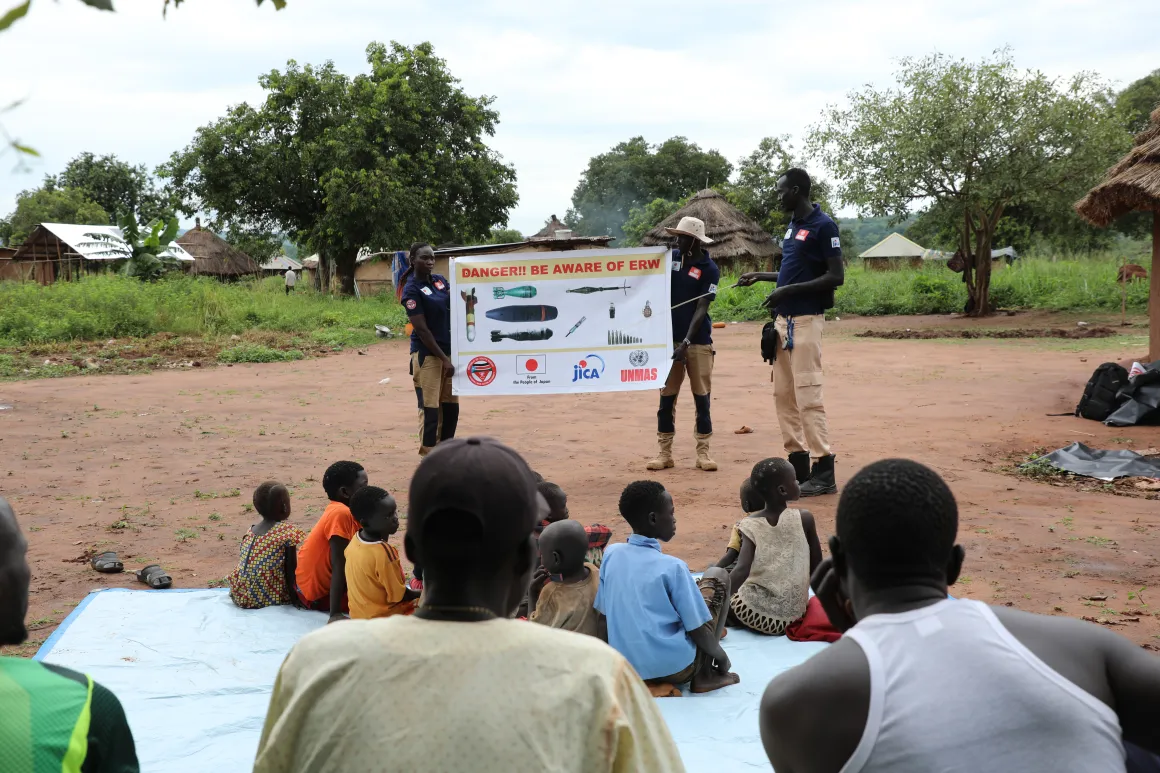
For residents, the session also provided an opportunity to ask questions and better understand what actions to take when a suspicious object is encountered.
“Before the session, I did not know what to do if I came across a suspicious object. Now I know not to touch it, to keep others away and report it. I can also share these messages with my family and children,” said Modi Moga, community member in Odemo Village.
Reaching communities where the need exists
The work in Odemo reflects a broader shift from training to operational delivery. With the six teams now deployed, the NMAA is better positioned to respond to reports from communities, verify suspected contamination and provide risk education where it is needed.
The teams are also reaching areas where access can be challenging, allowing concerns about suspected explosive ordnance to be documented closer to where they are reported. The information gathered provides reliable field data to help inform priorities and determine where further mine action intervention may be required.
Building sustainable national mine action capacity
The significance of ‘The Project for the Improvement of Working Environment for Mine Action Agencies’ extends beyond the activities of a single deployment.
By investing in trained, accredited and operational national teams, JICA's support is strengthening the NMAA's ability to take a greater operational role in addressing explosive ordnance contamination in South Sudan.
For communities such as Odemo, that investment is already translating into action: national teams are listening to residents, documenting suspected hazards and providing people with knowledge that can help keep them safe.
As the teams gain operational experience and continue reaching communities across the country, the NTS and assessments conducted by the NMAA survey teams will contribute to evidence-based prioritization of mine action activities and a stronger, nationally led response, improve the targeting of interventions, and enhance the overall effectiveness of South Sudan's mine action programme.
Through JICA's support and UNMAS' technical assistance, strengthened national capacity is moving from training into practice: one survey, one community and one safer decision at a time.


