

Renk, Upper Nile State, South Sudan - For people fleeing conflict, crossing a border can provide refuge from immediate violence, but some of the risks associated with war may persist. For Sudanese refugees in Renk, understanding how to recognise and respond safely to explosive ordnance (EO) is particularly important, including for those who may eventually return to conflict-affected areas of Sudan.
UNMAS South Sudan’s operational presence and technical capacity in Upper Nile State enabled the Programme to assist UNMAS Sudan in providing mine action support to refugees affected by the conflict in Sudan. UNMAS Sudan asked UNMAS South Sudan to support the delivery of Explosive Ordnance Risk Education (EORE) to Sudanese Refugees in Renk.
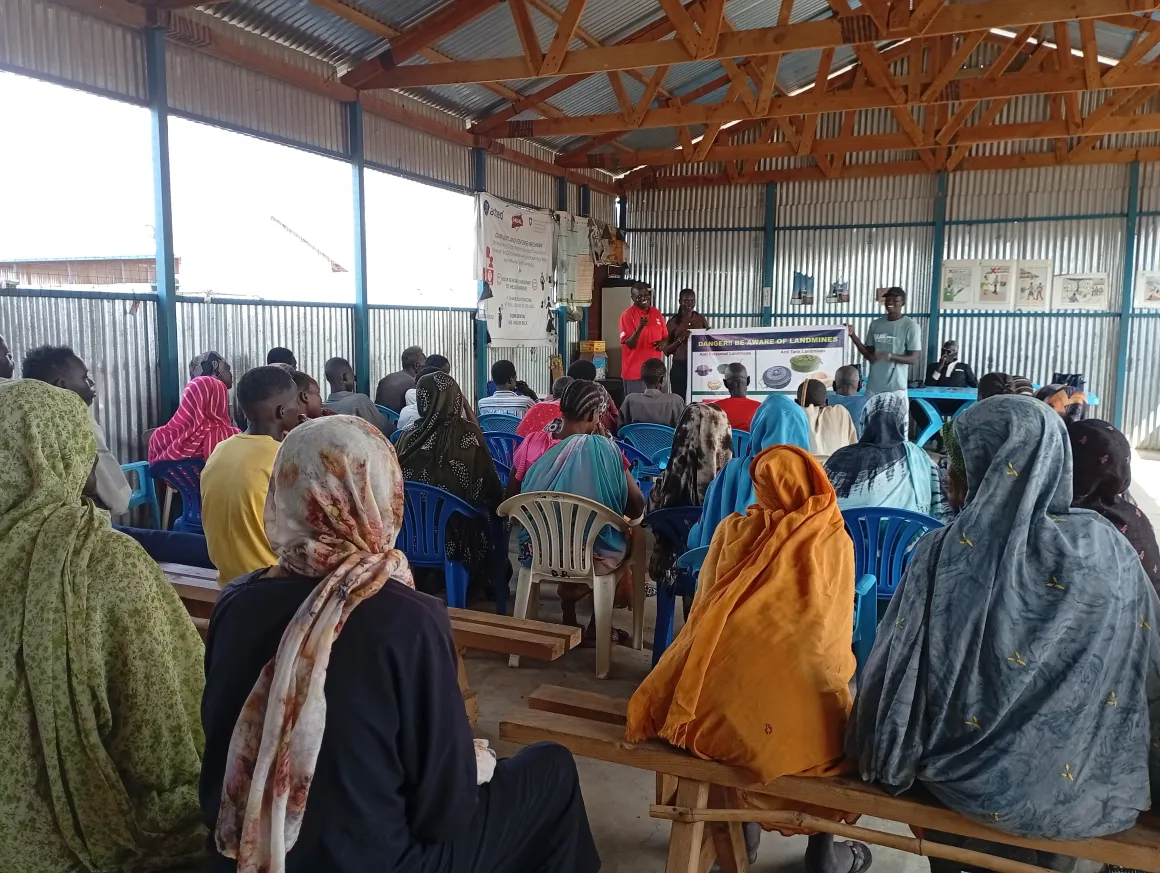
UNMAS South Sudan coordinated with the International Humanitarian Law and Youth Initiative (IHLYI, an international NGO working to promote international humanitarian law, disarmament, peace and security), to deliver EORE sessions. The activity was conducted in coordination with the Relief and Rehabilitation Commission (RRC) and humanitarian partners.
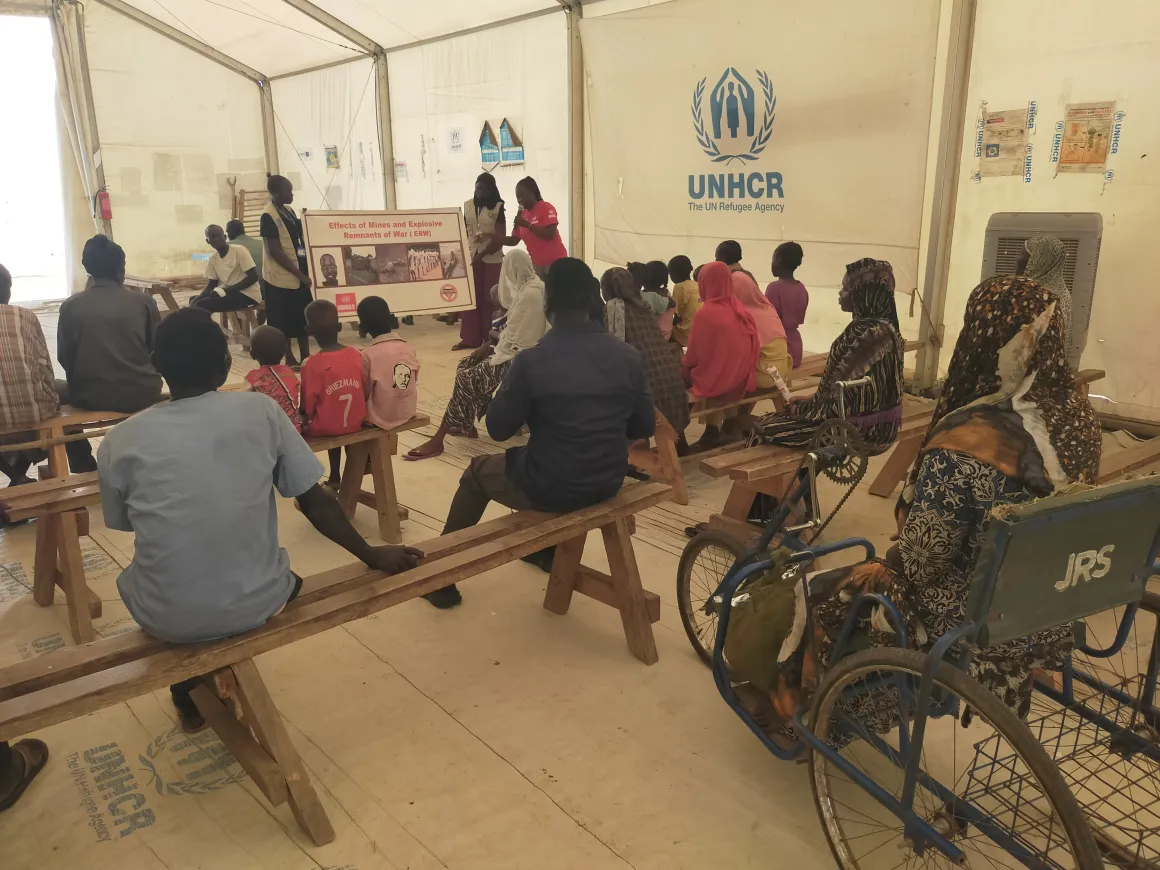
During four sessions, 255 Sudanese refugees, including 86 women, 52 men, 59 girls and 58 boys, received practical information on recognising explosive hazards and adopting safer behaviours. Participants learned not to approach or touch suspicious objects, to maintain a safe distance, warn others and report suspected explosive ordnance through appropriate channels.
For one Sudanese refugee who participated in the session and chose to remain anonymous, the information provided practical knowledge that could help them protect themselves, their family and others.
“The session helped me understand that if I see something that could be an explosive object, I should not approach or touch it. I should keep a safe distance, warn others, and report it through the appropriate channels. This is important knowledge that I can also share with my family and community. ”
Nourhan Moustafa , Founder and Executive Director of IHLYI and the Project Coordinator, highlighted the importance of equipping displaced communities with information they can use to reduce their exposure to explosive hazards.
“Through IHLYI’s Climate in Conflict – Sudan project, we wanted to ensure that Sudanese refugees displaced by the conflict have access to practical information on explosive ordnance risks, knowledge that remains essential wherever they are now and wherever they may move in the future. This collaboration helps equip communities to recognize risks, make safer decisions, and share these life-saving messages with their families and communities. ”
Through its youth-led initiative, IHLYI supported the trained Sudanese youth to engage directly with affected communities and apply their knowledge through community-based awareness activities. This engagement helped ensure that safety messages reflected the experiences and needs of Sudanese refugees.
Protecting Civilians from Explosive Ordnance Risks
The Renk initiative forms part of UNMISS/UNMAS efforts to protect civilians and reduce the risks posed by explosive ordnance among people affected by the conflict in Sudan. EORE sessions in Renk have also reached refugees, returnees and other groups, providing practical information to help them recognize hazards and respond safely.
Since the Sudan conflict began in April 2023, refugees and returnees have continued to cross into South Sudan, including through Upper Nile State. During this period, UNMAS South Sudan has provided EORE to 103,274 refugees affected by the Sudan conflict, including 23,210 women, 16,760 men, 30,192 girls and 33,112 boys.
For refugees who may eventually return to Sudan, EORE provided during displacement can remain relevant after their return. The knowledge can help individuals recognise explosive hazards, make safer decisions and share safety information with their families and communities.
Zehrudin Sukanovic, Chief of Mine Action Programme, UNMAS South Sudan, highlighted the importance of reaching communities affected by the Sudan conflict with risk education.
“Explosive ordnance risks do not end at national borders, and neither should mine action support. By working across programmes and with humanitarian partners, UNMAS helps protect conflict-affected communities wherever they are displaced and supports safer decisions when they are able to return home.”
Life-Saving Knowledge Across Borders
The initiative demonstrates how cooperation between the UNMAS Sudan and South Sudan programmes, national counterparts, humanitarian partners and community-based organisations can extend mine action support to people displaced across borders.
For Sudanese refugees in Renk, knowing how to recognise explosive hazards and respond safely can reduce the risk of accidents and help protect their families and communities.
Through this collaboration, UNMAS South Sudan continues to support the protection of civilians from explosive ordnance and ensure that communities affected by conflict have access to practical, life-saving risk education.


