


A Legacy of Conflict
Across South Sudan, the legacy of conflict continues to shape everyday life long after the guns have fallen silent. For communities in Jonglei and Upper Nile States, the violence of the 2013 and 2016 conflicts left behind more than destroyed homes and displaced families; it also scattered explosive ordnance across farmlands, footpaths, villages and riverbanks.
Today, as families rebuild their lives and children return to school, these hidden remnants of war continue to pose a deadly threat. Buried beneath the soil or concealed in vegetation, explosive ordnance remains a constant danger for people farming, herding livestock, collecting firewood and traveling between communities.
This is the story of how one tragic accident became the catalyst for protecting thousands of people. It is a story of resilience, rapid humanitarian response and the power of community engagement. Through support from the South Sudan Humanitarian Fund (SSHF), UNMAS transformed a single accident into an opportunity to reduce the risk of future accidents and strengthen community resilience.
One Child’s Accident
On 7 June 2026, life in Hai Assosa village, Malakal, Upper Nile State, unfolded as it normally would. Mrs. Roda Adut Deng, a 48-year-old farmer who had rebuilt her life after years of displacement, was preparing food at home while her 16-year-old son, Diew Chol Koul, spent time outside after recently returning from a holiday visit to relatives in Canal/Pigi County, Jonglei State.
Unbeknownst to his family, Diew had come across an object which appeared to be a live round of small arms ammunition and brought it home out of curiosity. While handling the cartridge, he struck its base against a fence, causing it to discharge and severely injure his hand.
Neighbours rushed to assist before transporting him by motorcycle to Malakal Teaching Hospital, where he received emergency medical treatment. Although he survived, the incident deeply affected his family and served as a painful reminder that explosive remnants of conflict continue to threaten communities years after active fighting has ended.
Tracing the Source
Rather than treating the accident as an isolated case, UNMAS immediately launched an investigation to determine how the live ammunition had reached Diew.
Through interviews with his mother, Mrs. Roda Adut Deng, and his uncle, Mr. Monyer Ngor Deng, investigators established that the ammunition had not originated in Malakal. Instead, it had been brought from Canal/Pigi County in neighboring Jonglei State.
This discovery fundamentally changed the nature of the response.
If one child could unknowingly carry explosive ordnance home, countless others living, farming, traveling and attending school in Canal/Pigi could face the same danger. The incident revealed not only the source of the ammunition, but also the urgent need to protect communities where explosive ordnance contamination remained a hidden threat.
Rapid Humanitarian Action
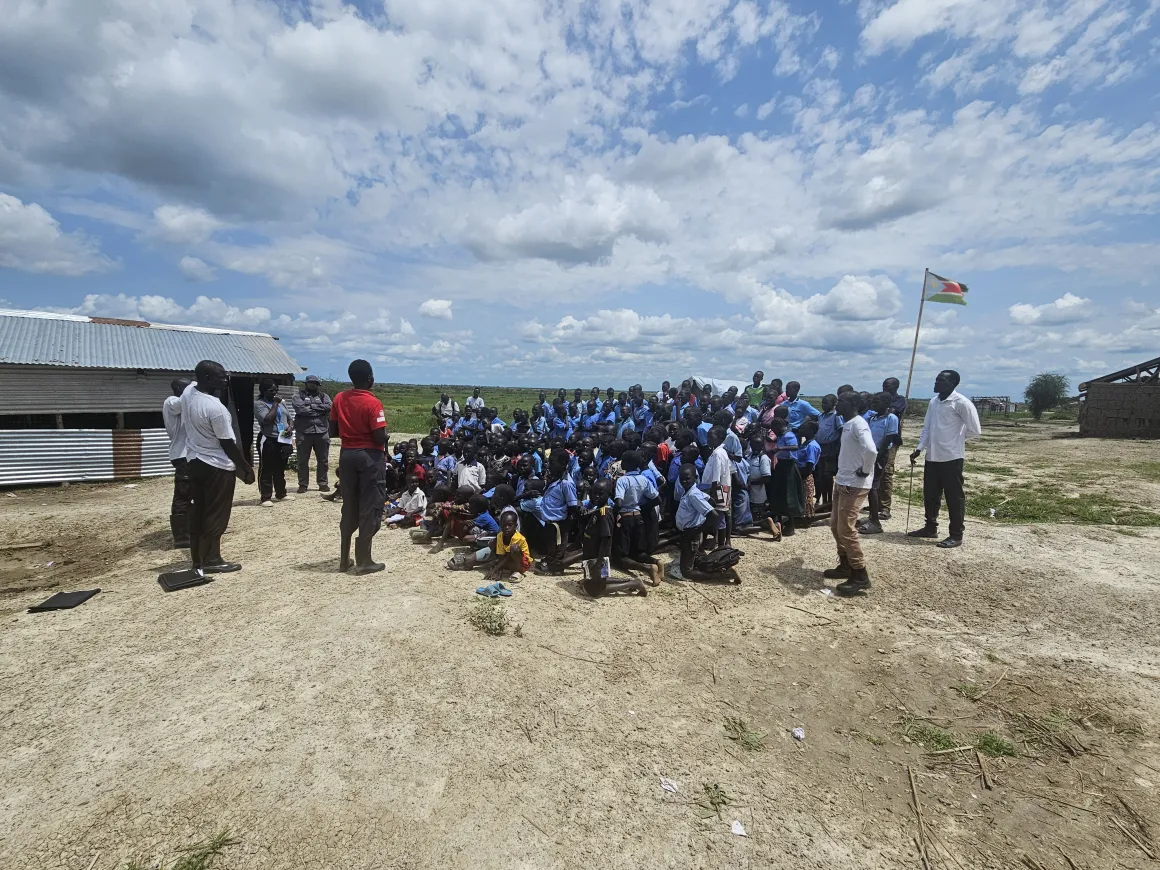
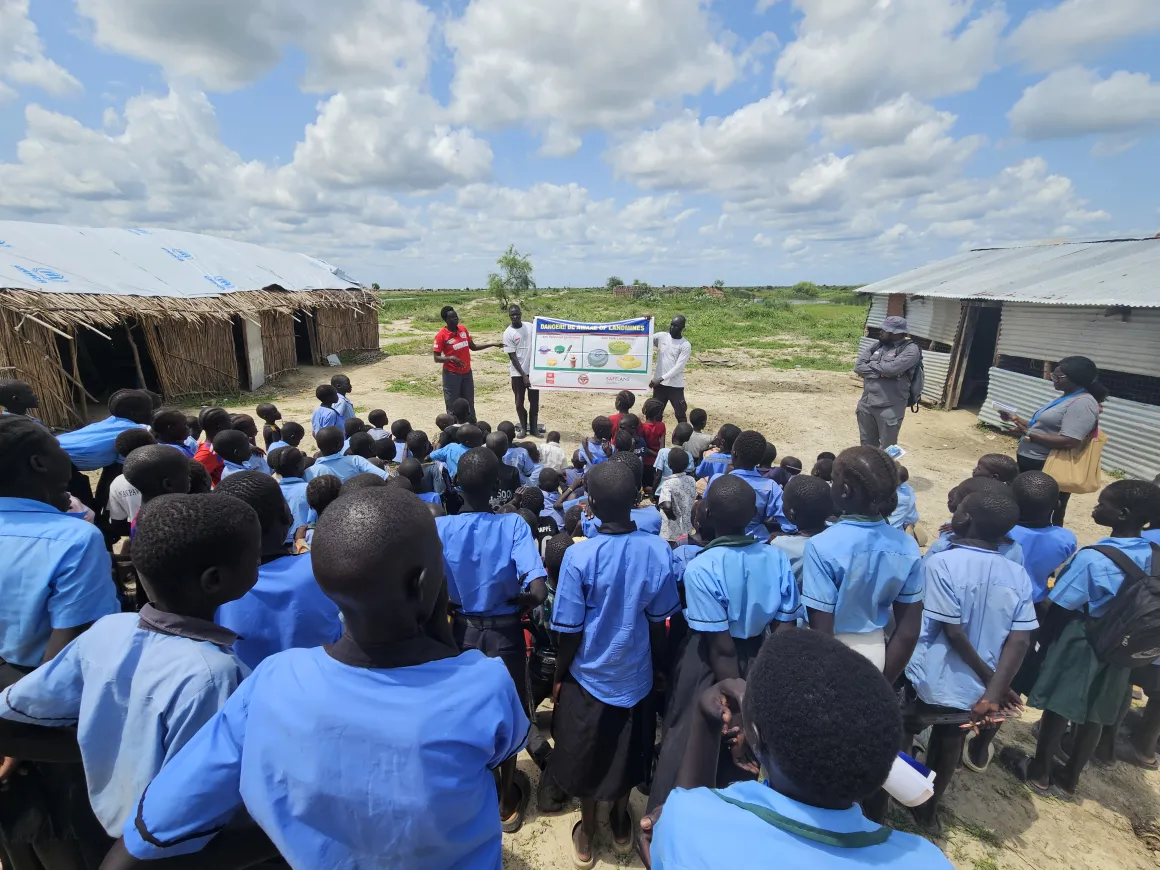
With support from the SSHF, UNMAS deployed emergency teams to Canal/Pigi County to conduct Non-Technical Surveys (NTS), identify suspected hazardous areas and deliver EORE to communities most at risk.
Working alongside local authorities, teachers, parents and community leaders, UNMAS gathered critical information about potential contamination while delivering practical, life-saving safety messages.
Children learned how to recognise dangerous items, avoid touching unfamiliar objects, move away to a safe distance, and immediately report suspicious objects to trusted adults or the relevant authorities. These simple but vital messages contribute to saving lives.
Building Safer Communities
The intervention extended well beyond awareness sessions.
By combining information gathered through Non-Technical Surveys with community-based risk education, UNMAS developed a clearer understanding of contamination patterns while empowering communities to become active participants in reducing the threat posed by explosive ordnance.
Teachers, parents and community leaders, who were engaged by UNMAS teams, became important partners in reinforcing these messages, helping ensure that life-saving information continued to spread throughout Canal/Pigi.
What began as a tragic accident affecting one family ultimately became the catalyst for protecting thousands of people across the county.
Turning Tragedy into Prevention
Although communities across Jonglei and Upper Nile continue to live with the legacy of conflict, the response in Canal/Pigi demonstrates the value of timely humanitarian action.
Through funding from the South Sudan Humanitarian Fund, UNMAS was able to rapidly investigate the incident, identify the source of the threat, deploy emergency survey and risk education teams, and equip vulnerable communities with the knowledge needed to stay safe.
Diew's injury cannot be undone. However, the lessons learned from his experience have already helped strengthen community awareness, improve understanding of potential contamination, and reduce the likelihood of similar accidents in the future.
His story is a powerful reminder that effective mine action is about far more than clearing explosive hazards. It is about protecting lives, empowering communities with knowledge and ensuring that the legacy of conflict does not continue to claim new victims.
For every child who now knows not to touch an unfamiliar object, every parent who understands the importance of reporting suspicious items, and every teacher who reinforces these life-saving messages, the impact of this intervention continues to grow. Through sustained humanitarian support and strong community partnerships, UNMAS is helping South Sudan move towards a safer future; one child, one family and one community at a time.


