


Bilinyang Payam, Central Equatoria State, South Sudan – Along the Juba - Bor road, land once considered too dangerous to use is now helping internally displaced persons (IDPs), including conflict-injured former soldiers and their families, rebuild their lives through farming, settlement and income generation.
Decades of conflict have left parts of South Sudan’s southernmost region, comprising Central, Eastern and Western Equatoria states commonly known as the Greater Equatoria region, contaminated by landmines and other unexploded ordnance, affecting communities, agricultural land and routes used by civilians. Despite years of explosive ordnance clearance carried out by UNMAS, and national and international mine action NGOs, explosive ordnance continues to pose risks in parts of the region. Greater Equatoria contains South Sudan’s most productive agricultural land, but explosive hazards continue to restrict access to farmland and other areas essential to civilian livelihoods.
Among the communities affected by explosive hazards is Bilinyang Payam, a short drive outside the rapidly growing capital city of Juba. The land is home to internally displaced persons (IDPs), returnees and host communities seeking to establish homes, cultivate crops and rebuild their livelihoods. Yet explosive hazards left by conflict had restricted safe access to land needed for these activities.
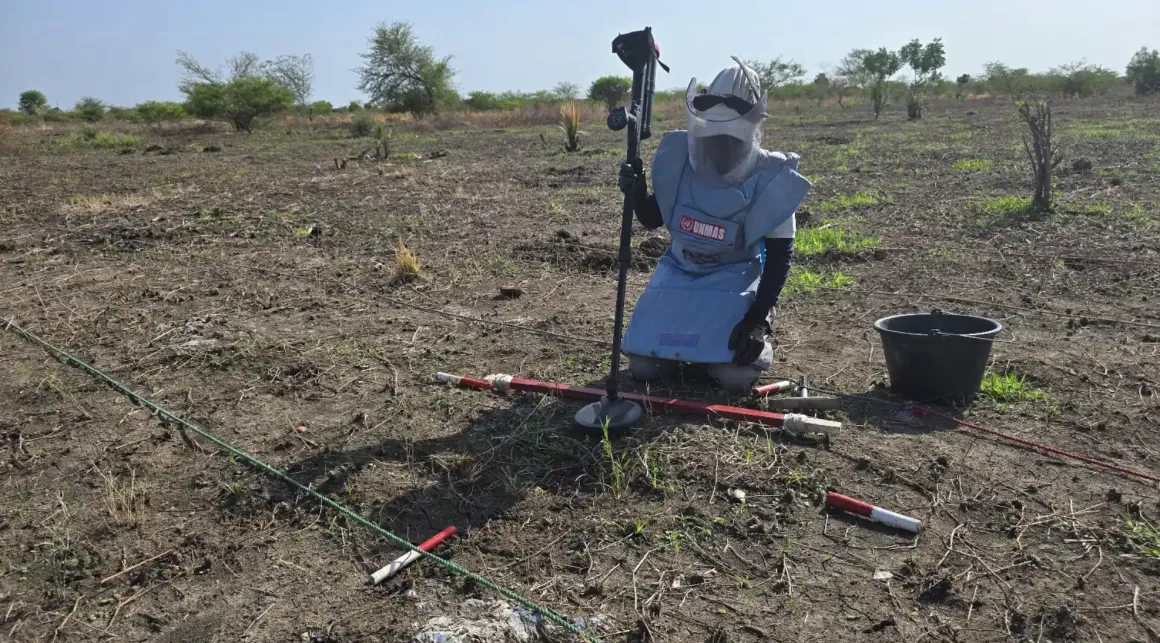
In support of UNMISS, UNMAS deployed mine action teams to conduct explosive ordnance clearance operations in Bilinyang. The teams located and removed 51 anti-tank mines, 36 items of unexploded ordnance and seven items of small arms ammunition. Following clearance, the land was released for civilian use.
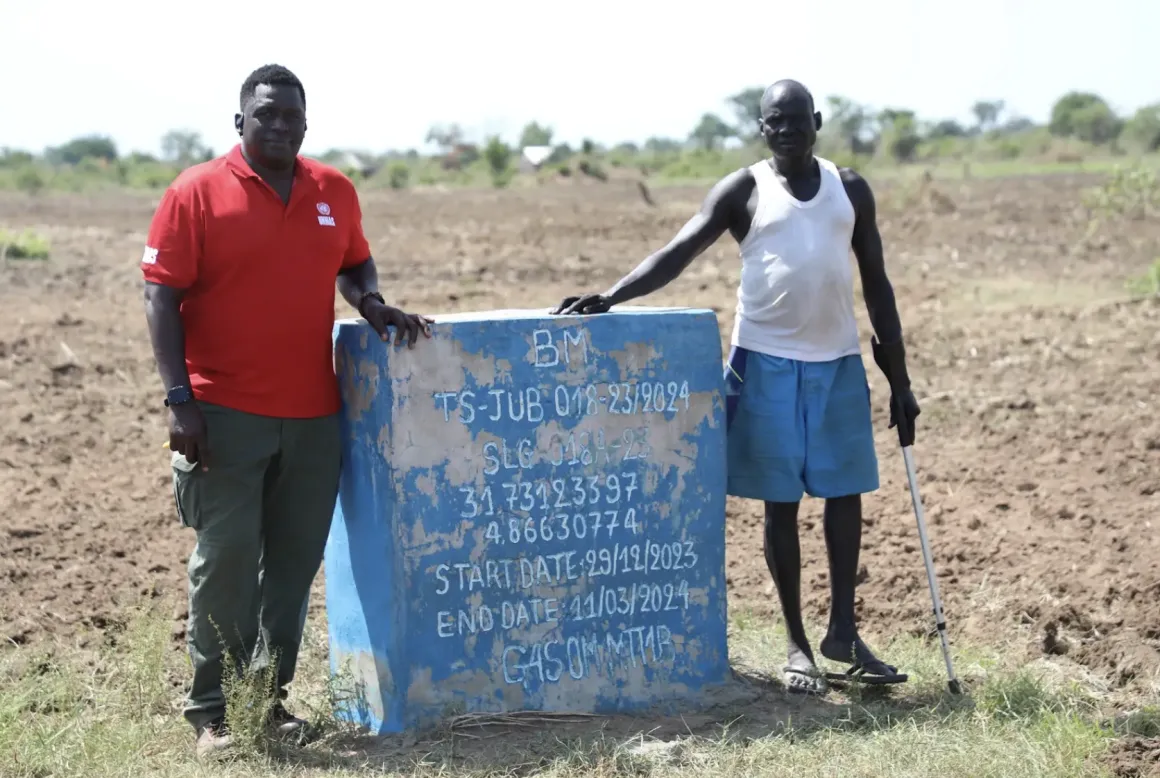
Especially for new arrivals, establishing a home or livelihood can increase exposure to explosive hazards. Clearing vegetation, digging foundations and preparing fields disturb the ground and can bring people into contact with mines or other explosive items buried or concealed in the soil. Ensuring that land is safe is therefore essential for families seeking to rebuild.
Among them are more than 30 internally displaced, conflict-injured former soldiers who call themselves the Wounded Heroes.
Many members sustained permanent injuries during the conflict with Sudan and South Sudan’s civil war and were displaced by conflict. Their injuries limit their ability to pursue many traditional forms of employment, but access to cleared land in Bilinyang has provided an opportunity to turn to agriculture. The group now farms collectively, growing crops for household consumption and sale in local markets.
Standing in his field, Mabior Kwai, a member of the Wounded Heroes farming group, reflected on what access to safe land has meant for the group.
"We are more than 30 members in this group. Many of us were injured during the war and face difficulties every day. We thank UNMAS for clearing this land. Today we are happy because we can farm without fear. We know the land is safe, and we can focus on feeding our families and building our future." Mabior Kwai, member of the Wounded Heroes farming group
For the Wounded Heroes, the benefits of safe land extend to their families. Farming has become a household effort, with spouses, children and relatives contributing to cultivation and helping turn agricultural production into food and income.
Mary Amour, whose husband is a member of the Wounded Heroes group, said farming has helped her family meet everyday needs and invest in their children’s future.
"My husband was injured during the war and cannot do much physical work. I help cultivate our farm and sell some of what we harvest. The money helps me take my children to school and support my family. This land has given us an opportunity to support ourselves and build a better future for our children."
Her experience illustrates how the impact of clearance extends beyond making land physically safe. For displacement-affected families in Bilinyang, access to cleared land allows everyday activities from building homes to cultivating crops, to take place without the same threat from explosive hazards.
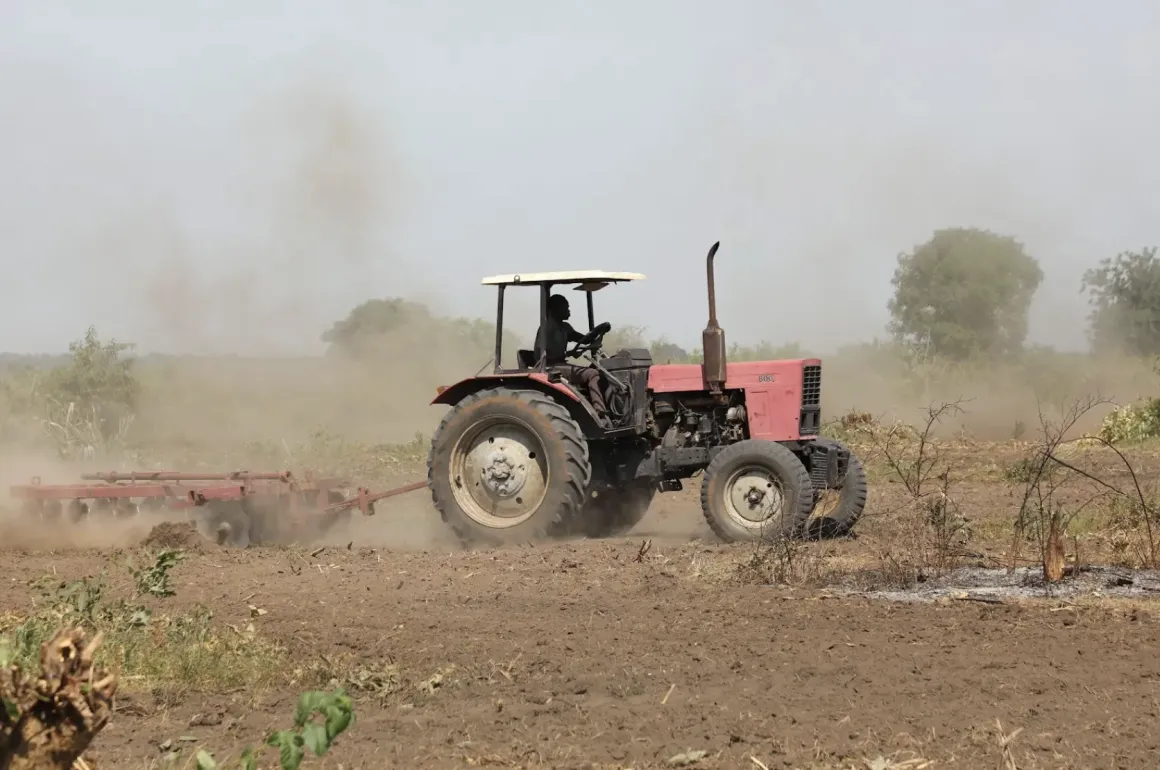
Today, tractors prepare fields and families cultivate crops where explosive hazards once restricted access. For the Wounded Heroes and other conflict-affected families in Bilinyang, the land is no longer defined solely by the legacy of conflict and the fear of explosive hazards, but by the opportunities it offers. Families can now cultivate their fields, earn an income and rebuild their lives without the constant fear of encountering explosive ordnance.


